What Accreditation a Peptide Testing Lab Should Have
What accreditation a peptide testing lab should have, why ISO/IEC 17025 and a stated scope matter, and how a reader can verify the credential is real.
Diana Walsh, PharmD, BCPS is a Board-Certified Pharmacotherapy Specialist with a Doctor of Pharmacy from the University of Minnesota and pharmacy residency training at Mayo Clinic.
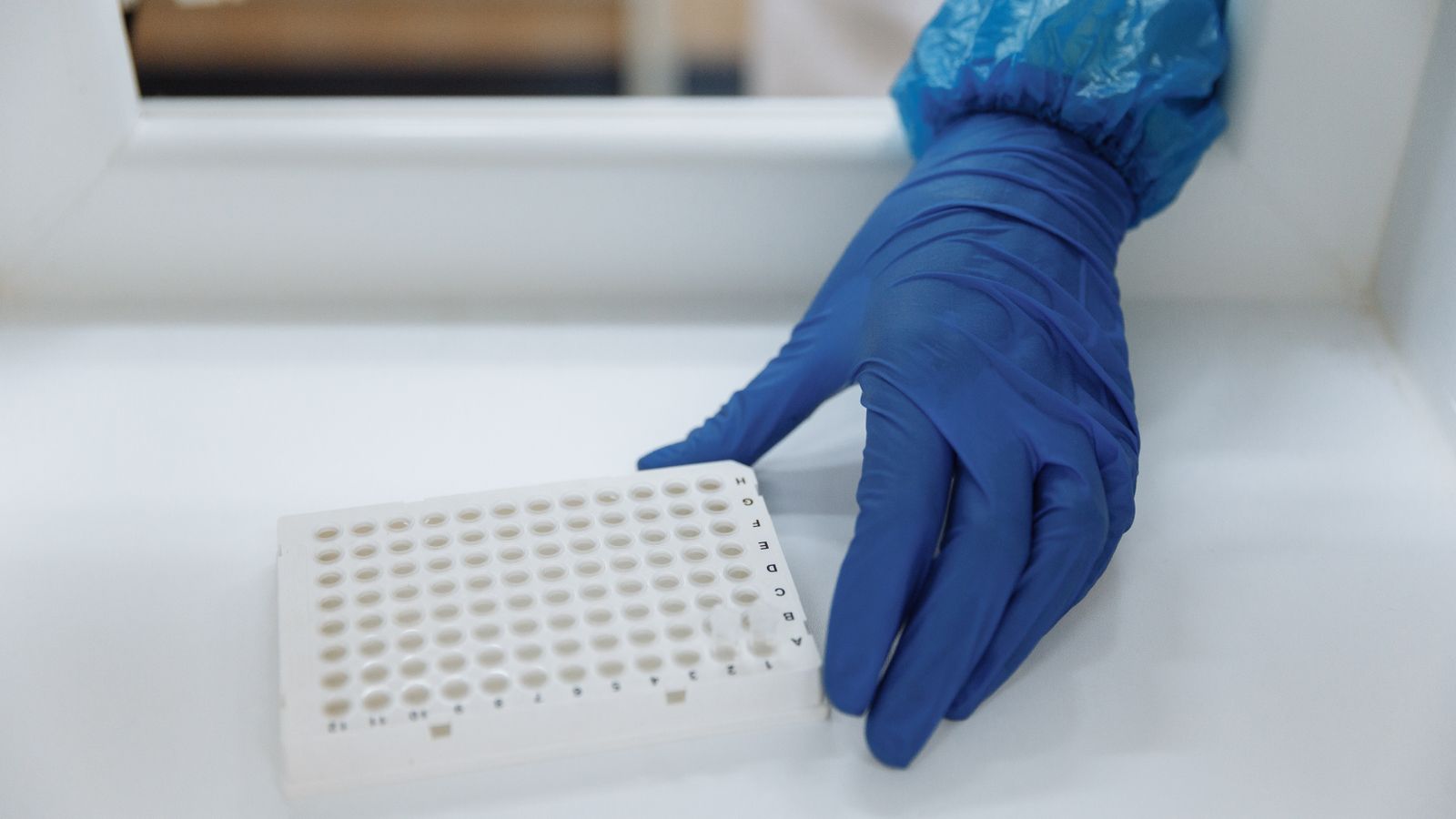
What accreditation a peptide testing lab should have comes down, in practice, to one credential: ISO/IEC 17025, the international standard covering testing and calibration laboratories. Accreditation under that standard means an independent accreditation body reviewed the lab’s specific test methods, equipment calibration records, and internal quality procedures, and confirmed they meet a defined technical bar — not that the lab simply registered a business name or bought a wall certificate. Knowing what that accreditation actually covers, and what it leaves out, is what separates a verifiable credential from a phrase used for its marketing weight.
What “Accredited” Actually Means for a Testing Lab
Accreditation is a formal determination, made by a recognized third-party body, that a laboratory is competent to carry out a specific set of test methods. It is distinct from certification of a product and distinct from a business license. A lab can be legally licensed to operate and still have no laboratory accreditation at all, because accreditation evaluates technical competence in a defined analytical scope, not the legality of doing business.
The distinction matters on a peptide listing because “accredited” gets used loosely. Some pages apply it to the lab that ran the test. Others apply it, incorrectly, to the manufacturer’s facility, or to a generic quality claim with no laboratory named at all. Only the first use describes an actual accreditation credential, which is why pinning down what accreditation a peptide testing lab should have starts with identifying which entity the claim is even about.
ISO/IEC 17025: The Standard That Applies
ISO/IEC 17025 is the standard used almost universally for testing and calibration laboratories, including the analytical labs that produce peptide certificates of analysis. It sets requirements across two broad areas: management-system practices, such as document control and handling of complaints, and technical competence, such as staff qualification, equipment calibration, method validation, and measurement uncertainty.
A lab accredited to ISO/IEC 17025 has been assessed against both sets of requirements by trained assessors from an accreditation body, and is subject to periodic reassessment to keep the credential current. This is a different, and more specific, process than a lab simply stating that it “follows ISO guidelines” without holding an actual accreditation certificate issued under that standard.
Scope of Accreditation: Why the Method List Matters
Accreditation under ISO/IEC 17025 is not a blanket approval covering everything a lab does. Every accredited lab is issued a scope document listing the exact test methods it is accredited for — for example, HPLC purity analysis for a defined class of compounds, or LC-MS identity confirmation using a specific validated method. A lab can be accredited for one method and not another, and a certificate of analysis produced using a method outside the lab’s accredited scope is not covered by that accreditation, even if the same lab holds accreditation for other tests.
This is why the strongest COAs reference not just an accreditation body’s name, but the specific method and scope item the result falls under. A buyer comparing catalogue pages for a compound such as tirzepatide, including heezresearch.com/product/tirzepatide/, is looking for exactly that kind of specificity on the linked documentation, rather than a general assurance that the lab is accredited for something, somewhere.
Accreditation Bodies That Issue the Credential
ISO/IEC 17025 accreditation is issued by recognized accreditation bodies rather than by the standard’s authors directly. In the United States, labs commonly hold accreditation from bodies such as A2LA (the American Association for Laboratory Accreditation), ANAB (the ANSI National Accreditation Board), or similar organizations recognized under international mutual-recognition arrangements. Each accreditation body maintains a public directory or registry where an accredited lab’s certificate number, scope, and status can be looked up directly, independent of anything stated on the supplier’s own listing.
That external lookup is the part worth emphasizing. A certificate number printed on a COA is a claim; the same number returning a matching, active listing on the accreditation body’s own registry is verification.
Proficiency Testing and Ongoing Verification
Accreditation is not a one-time award. Accredited labs are typically required to participate in proficiency testing, in which the lab analyzes blind samples of known composition supplied by an outside program and its results are compared against the expected values. Ongoing accreditation also depends on periodic reassessment by the accrediting body, which can review updated method validations, equipment records, and any changes to staff or procedures since the last review.
A lab that lost its accreditation, let it lapse, or never held it for the specific method in question can still describe itself in general terms as “accredited” on marketing material. This is one of the reasons a scope-and-registry check carries more weight than the word appearing on a page.
What a Listing Should Show to Support an Accreditation Claim
A listing making a genuine, checkable accreditation claim typically includes several specific details rather than the single word “accredited” on its own:
| Element | What it should include | Why it matters |
|---|---|---|
| Accrediting body | Named organization (e.g., A2LA, ANAB) | Identifies who issued the credential and where to verify it |
| Certificate or registration number | A specific identifying number | Allows lookup on the accrediting body’s public registry |
| Scope reference | The specific method or test class covered | Confirms the accreditation applies to the test actually performed |
| Lab name matching the COA | Same lab named on the certificate of analysis | Connects the accreditation to the document a buyer is reading |
A listing that supplies all four gives a reader a path to independent confirmation. A listing that supplies only the word “accredited,” with no body, number, or scope named, is not offering anything a reader can check.
Comparing Accreditation to Other Quality Claims
Peptide listings sometimes substitute adjacent claims for laboratory accreditation, and the substitution is easy to miss. “GMP certified” describes a manufacturing quality-system standard applied to production facilities, not a testing lab’s analytical competence — a compound can be produced under GMP conditions and still be tested by a lab with no accreditation at all, or vice versa. A state business license or import permit confirms the entity is legally allowed to operate, not that its analytical results meet a technical accuracy standard. Readers working through several listings side by side sometimes find it useful to cross-reference how different sites present these distinctions; a peer research-peptide catalog covers sourcing terminology from a documentation angle, while peer research-peptide catalogs focus more on pricing context, and reading both can help clarify which claim on a given page is actually about the testing lab rather than the manufacturer or the seller.
Red Flags in Accreditation Claims
A few patterns are worth treating with caution when a listing references lab accreditation. A generic accreditation-body logo with no certificate number nearby cannot be checked against anything. A COA naming a lab that doesn’t match the accreditation claim elsewhere on the page breaks the chain between the credential and the document. A scope reference that doesn’t cover the method actually used to produce the reported purity or identity figure means the accreditation, even if real, doesn’t apply to that specific result. And an accreditation claim with no accrediting body named at all is, functionally, no different from the unsupported word “accredited” standing alone.
None of these patterns alone proves a listing is inaccurate. But each one removes a step a reader would otherwise be able to take to confirm the claim independently, which is the entire value accreditation is supposed to provide. Working through the four elements listed above against a specific listing is a faster check than trying to judge accreditation from tone or presentation alone.
Summary
What accreditation a peptide testing lab should have, in practical terms, is ISO/IEC 17025 accreditation issued by a recognized accreditation body, covering a scope that includes the specific method used to produce the reported results. The credential is verifiable: a named body, a certificate number, and a scope entry that a reader can look up independently of the supplier’s own page. A listing that supplies those specifics is offering evidence. One that only uses the word “accredited” is offering a description with nothing behind it to check.