What Third-Party Testing Means on a Peptide Listing
What third-party testing means on a peptide listing, how it differs from in-house claims, and what a real certificate of analysis should include.
Diana Walsh, PharmD, BCPS is a Board-Certified Pharmacotherapy Specialist with a Doctor of Pharmacy from the University of Minnesota and pharmacy residency training at Mayo Clinic.
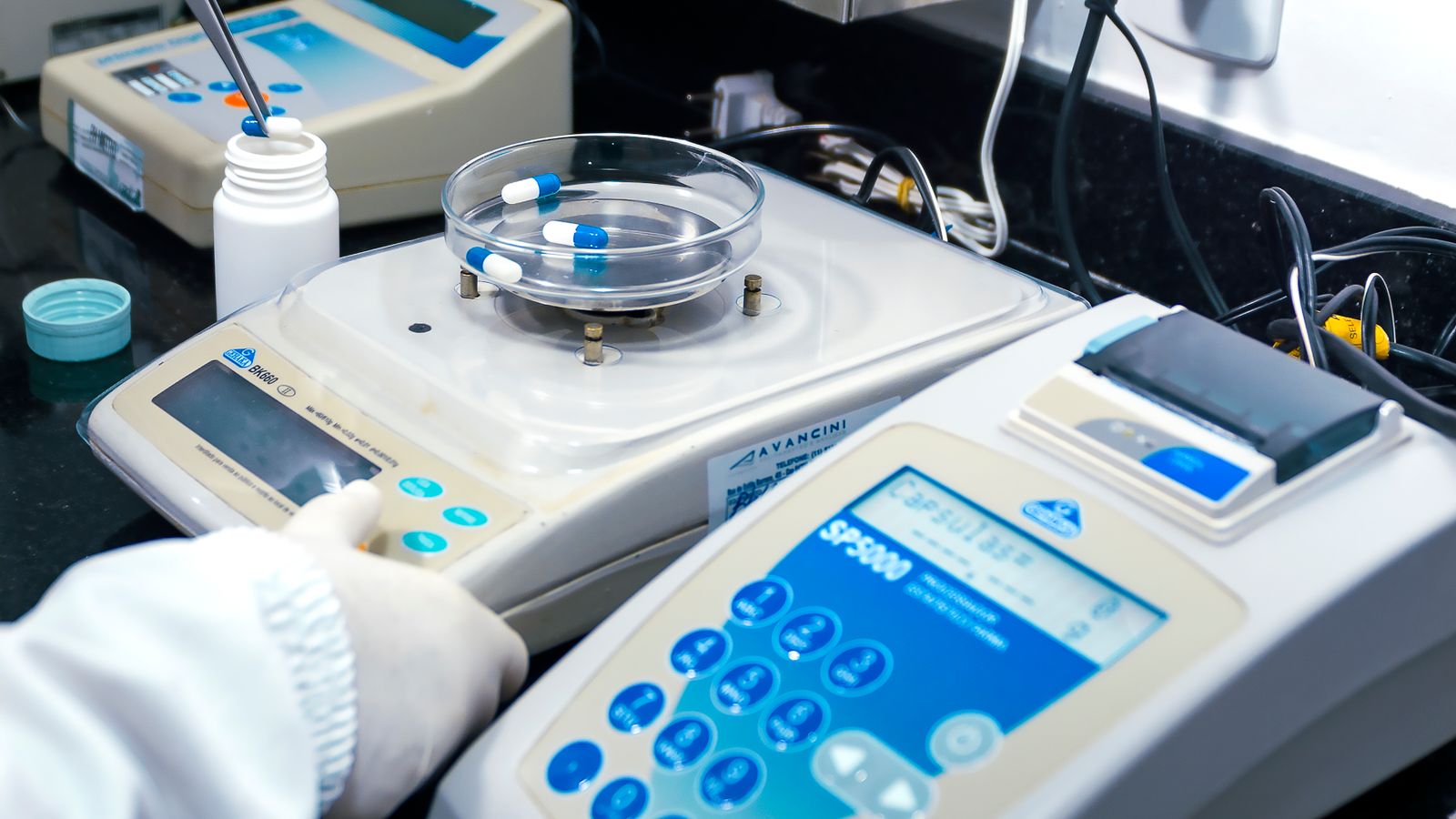
When a peptide listing says a product has been “third-party tested,” it means an analytical lab with no ownership stake in the supplier examined a sample and reported findings independent of the seller’s own claims. That single phrase does a lot of work on a product page, and it is worth unpacking, because the term gets used loosely across the research-chemical market to describe several very different levels of verification.
What Third-Party Testing Actually Refers To
At its core, third-party testing means a sample of a specific batch was sent to a laboratory that is not owned or operated by the seller, and that lab returned data describing the sample’s composition. The lab typically reports on identity (does the substance match what the label says), purity (what percentage of the sample is the target compound versus other material), and sometimes additional parameters like residual solvents or endotoxin levels.
The word “third-party” is doing the important work here. A supplier that tests its own products in an in-house lab and publishes the results is still reporting real numbers, potentially, but those numbers come from a party with a direct financial interest in a favorable result. Independence from that interest is the entire point of routing a sample through an external lab.
Why a Listing’s Own Claims Aren’t the Same as Verification
A listing can say “99% pure” without any lab having touched the product. That claim is marketing copy until it is backed by a document a reader can actually inspect. This is why the presence of a downloadable or linked certificate of analysis (COA) matters more than the adjectives surrounding it on the page. A COA is the artifact; “third-party tested” is the description of how that artifact was produced.
Some listings display both: a purity percentage in the product description and a COA that a reader can open. Others display only the percentage, with a footnote referencing testing that isn’t actually visible anywhere on the page. The gap between those two patterns is the difference between a verifiable claim and an unverifiable one.
Reading a Certificate of Analysis
A COA generated by an independent lab typically includes several identifying elements that let a reader connect the document to the specific product they’re looking at, rather than to the compound in general. These elements include the lab’s name and accreditation information, the date the sample was analyzed, a batch or lot number, the analytical method used, and the resulting purity and identity figures.
The batch or lot number is the detail most often missing from lower-quality listings. Without it, there is no way to confirm that the COA on the page corresponds to the specific vial a buyer would receive, rather than to some earlier or unrelated production run.
Common Testing Methods Referenced on Listings
Different analytical methods answer different questions about a sample, and listings sometimes reference the method name without explaining what it actually measures. The table below summarizes what a reader typically sees cited on a COA.
| Method (abbreviation) | What it primarily measures | Typical report output |
|---|---|---|
| HPLC (high-performance liquid chromatography) | Purity — separates the target compound from related impurities | Percent purity, chromatogram |
| Mass spectrometry (MS) | Identity — confirms molecular weight matches the labeled compound | Identity confirmation, mass spectrum |
| LC-MS (combined) | Both identity and purity in one run | Percent purity plus identity confirmation |
| Endotoxin testing (LAL) | Bacterial endotoxin contamination | Endotoxin units per unit volume |
| Sterility testing | Presence or absence of microbial growth | Pass/fail result |
A listing that references “HPLC tested” is making a narrower claim than one that references LC-MS with an accompanying identity confirmation. Neither is inherently more or less legitimate as a testing method, but the two claims are not interchangeable, and a careful reader treats them differently when comparing listings.
Batch-Specific vs Generic COAs
One of the more important distinctions in how third-party testing is presented is whether the COA is batch-specific or generic. A batch-specific COA carries a lot number that ties it to one production run and, ideally, to the item a buyer is actually purchasing. A generic COA is a testing summary for the compound in general, sometimes produced once and reused across every batch the supplier sells afterward, regardless of whether later batches were retested.
A supplier’s catalogue page for a compound such as retatrutide can carry either type, and the practical difference is significant: a batch-specific document reflects the vial in front of the buyer, while a generic one only reflects a sample tested at some earlier, unspecified point. Listings rarely state which type they’re showing outright, so the reader has to check whether a lot number appears on the document itself and whether that number is referenced anywhere on the product page.
Red Flags in How Testing Is Presented
A few patterns are worth noticing when evaluating how a listing frames its third-party testing claims. A percentage purity figure with no linked document at all is the weakest form of the claim. A linked document with no lab name, no accreditation reference, and no method listed is only marginally stronger, since there’s no way to confirm who produced it. A screenshot or low-resolution image of a COA, rather than a text-selectable PDF, makes it harder to verify details like the batch number or date. And a COA date that predates the supplier’s own listing of that specific batch by a wide margin can indicate the document is a generic reference rather than a batch match.
None of these patterns proves a listing is inaccurate on their own, but each one removes a layer of verification that a reader would otherwise have available. Third-party testing means the least when its documentation gives a reader nothing to check.
Comparing Testing Disclosure Across a Listing
The clearest way to evaluate a listing’s testing claims is to look for all of the following together: a named, independent lab; a batch or lot number on the COA; a method that matches what’s claimed in the product description; and a document format that can be opened and read in full rather than only glimpsed as a thumbnail. A listing that provides all four gives a reader something closer to a verifiable audit trail. A listing that provides one or two is asking the reader to take the rest on faith.
Buyers comparing multiple suppliers side by side often find it useful to work through a broader sourcing checklist rather than evaluating testing claims in isolation, and a peer research-peptide catalog walks through that fuller comparison, from packaging to documentation to how a supplier handles questions about a specific batch.
Summary
Third-party testing on a peptide listing means a sample was analyzed by a lab independent of the seller, but the phrase alone doesn’t tell a reader how thorough that testing was or whether it applies to the specific batch being sold. The document to look for is the COA itself: a batch-specific report from a named lab, using a stated method, that a reader can open and verify line by line. Everything else on the page is description; the COA is the evidence.