Bacteriostatic Water vs Sterile Water for Peptides
A comparison of bacteriostatic water vs sterile water for peptides: what the labels mean, how they differ, and why listings specify one over the other.
Diana Walsh, PharmD, BCPS is a Board-Certified Pharmacotherapy Specialist with a Doctor of Pharmacy from the University of Minnesota and pharmacy residency training at Mayo Clinic.
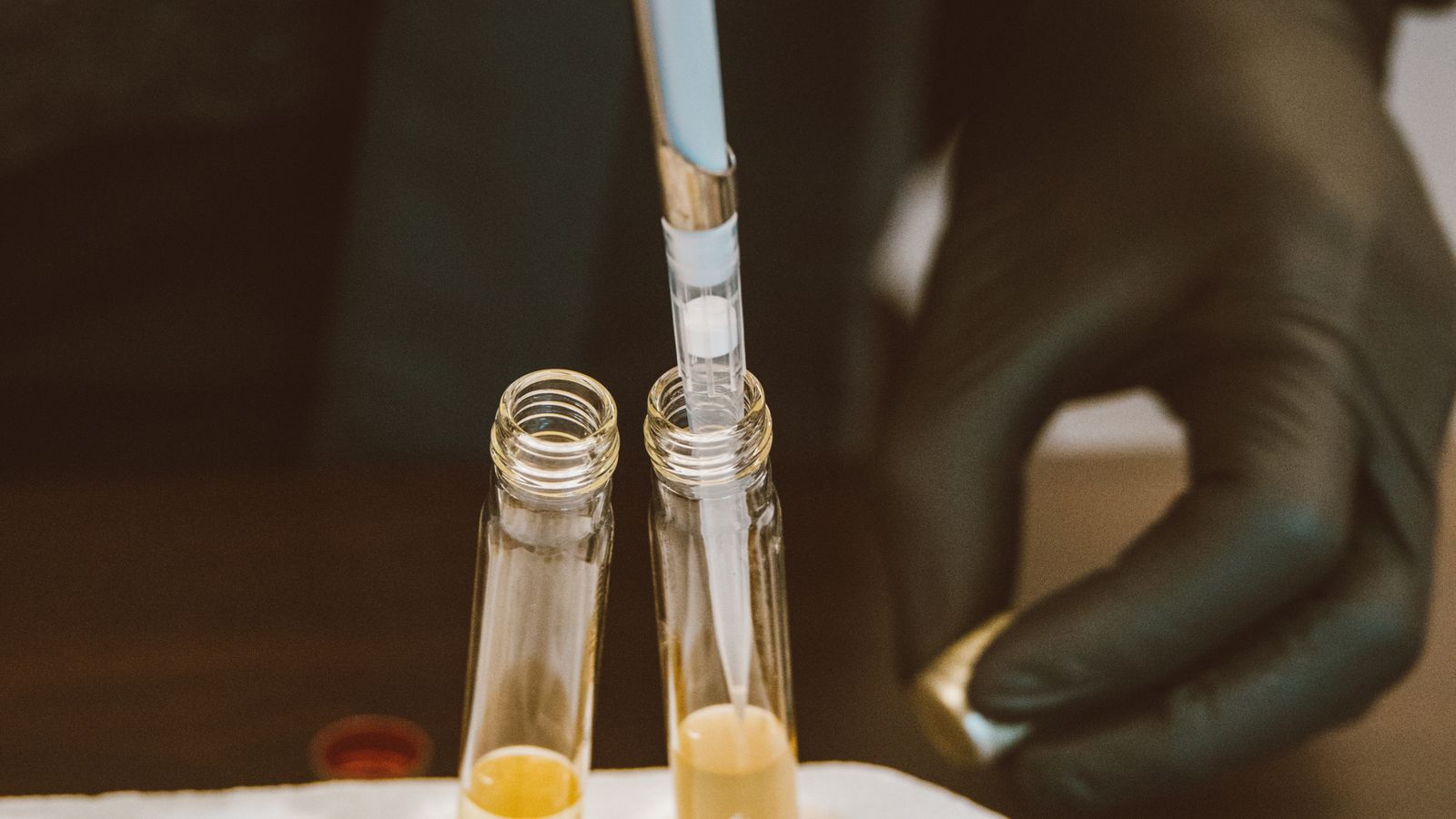
Bacteriostatic water vs sterile water for peptides comes down to one additive: a preservative that lets a diluent be drawn from repeatedly without supporting microbial growth between uses. Sterile water is sterile only at the moment the seal is broken. Bacteriostatic water carries a low concentration of benzyl alcohol, which keeps the solution resistant to contamination across multiple withdrawals from the same vial. That difference in composition is what drives most of the labeling and handling conventions seen across peptide listings.
What “Sterile” Actually Means
Sterile water for injection is water that has been purified and sterilized, then sealed under conditions that keep it free of microorganisms. It contains no preservative. Once a vial is punctured, the manufacturer’s sterility guarantee applies only to that single draw. Any subsequent access introduces a nonzero chance of contamination, since nothing in the solution discourages microbial growth. This is why single-use sterile water vials are typically discarded after one draw in clinical settings, and why listings that pair sterile water with a peptide vial often frame it as intended for immediate, one-time use.
What “Bacteriostatic” Adds
Bacteriostatic water for injection is sterile water with benzyl alcohol added, generally around 0.9%. Benzyl alcohol is a preservative, not a sterilizing agent — it does not sterilize the solution on its own, but it inhibits the growth of bacteria that might otherwise be introduced when a needle repeatedly enters the vial through the rubber stopper. That property makes bacteriostatic water the more common diluent choice in listings for multi-dose reconstitution, since a single vial of diluent can be used across several reconstitution events rather than being opened and discarded after one.
Reading the Label Correctly
Neither product is labeled or marketed as suitable for direct human use outside of the sourcing and handling context described on a given listing. The distinction that matters for documentation purposes is shelf behavior after the vial is opened:
| Property | Sterile Water | Bacteriostatic Water |
|---|---|---|
| Preservative | None | Benzyl alcohol (~0.9%) |
| Typical listing use | Single draw, single use | Multiple draws from one vial |
| Stated post-opening handling | Discard after one use | Retained for repeated access per listing instructions |
| Common vial sizes in listings | 10 mL, 20 mL | 10 mL, 20 mL, 30 mL |
This table reflects how listings typically describe the two diluents, not a recommendation for either.
Why the Diluent Doesn’t Change the Concentration Math
Reconstitution concentration is a function of the mass of lyophilized material in the vial and the volume of diluent added, regardless of which water type is used. The formula is the same either way: concentration equals vial mass divided by diluent volume.
As a worked example: a listing describes a 5 mg vial reconstituted with 2 mL of diluent. Concentration is 5 mg ÷ 2 mL = 2.5 mg/mL. Converted to a per-unit basis on a U-100 syringe, where 1 mL equals 100 units, each unit holds 2.5 mg ÷ 100 = 0.025 mg, or 25 mcg per unit (since 1 mg = 1000 mcg, 0.025 mg × 1000 = 25 mcg). Checking the arithmetic a second time: 5 mg over 2 mL is indeed 2.5 mg/mL, and 2.5 mg/mL divided across 100 units per mL gives 0.025 mg per unit, confirmed. The diluent’s preservative content has no bearing on this calculation — only the mg-to-mL ratio does.
Why Listings Specify One Over the Other
A listing’s choice of bacteriostatic vs sterile water usually tracks how many draws the accompanying peptide vial is expected to see. Vials framed around single-session use are more often paired with sterile water, since the multi-dose stability that bacteriostatic water offers isn’t relevant if the contents are used once. Vials framed around repeated access over time are more often paired with bacteriostatic water, because the preservative addresses the repeated-puncture handling those listings describe. Documentation practices vary by supplier, so the pairing on any given listing should be read as that supplier’s stated convention rather than a universal rule. Buyers comparing listings across suppliers will also notice that catalogue breadth varies significantly — a wider inventory generally correlates with more consistent documentation of which diluent accompanies which compound, which is one reason sourcing decisions increasingly favor a HEEZ Research with published paperwork over listings that leave the diluent pairing unstated.
Storage and Handling Notes Commonly Cited in Listings
Bacteriostatic water listings commonly cite a limited window after first puncture during which the multi-dose vial is considered usable, after which it is discarded regardless of remaining volume. Sterile water listings, lacking a preservative, generally specify a much shorter or single-use window. Both diluent types are typically listed with refrigerated storage guidance once opened, and both are described as distinct from the peptide itself, which is usually documented separately in terms of its own stability once reconstituted. None of this handling guidance substitutes for what a specific listing states about its own product, since formulation details can vary supplier to supplier.
Terminology Precision Matters for Documentation
Because “bacteriostatic” and “sterile” describe different properties — one about ongoing microbial resistance, the other about a point-in-time absence of contamination — conflating the two terms in documentation can misstate what a diluent is actually suited for. A listing that says “sterile water” when it means a preserved, multi-draw product (or vice versa) creates a mismatch between the stated handling instructions and the product’s actual composition. Careful documentation keeps these terms distinct, which is part of why the bacteriostatic water vs sterile water for peptides distinction shows up so consistently in listing language and supplier FAQs.
Summary
The core difference between bacteriostatic water and sterile water for peptides is the presence of a preservative: bacteriostatic water contains benzyl alcohol and is documented for repeated draws from one vial, while sterile water contains no preservative and is documented for single-use handling. The diluent choice affects storage and access conventions but not the underlying concentration math, which depends only on vial mass and diluent volume. Reading a listing’s stated diluent type alongside its handling instructions is the more reliable way to understand what that listing is actually describing.